If your evenings are screens
+58%
Night-time melatonin
Melatonin is your sleep hormone. It rose after two weeks of wearing blue-blocking glasses each evening.
Ostrin et al., 2017 · University of Houston


Blue-rich evening light can suppress melatonin and push the body clock—and sleep—later. SleepSpec is designed for the final 1–2 hours before bed, filtering the blue-green range while you continue watching, reading, scrolling or working.
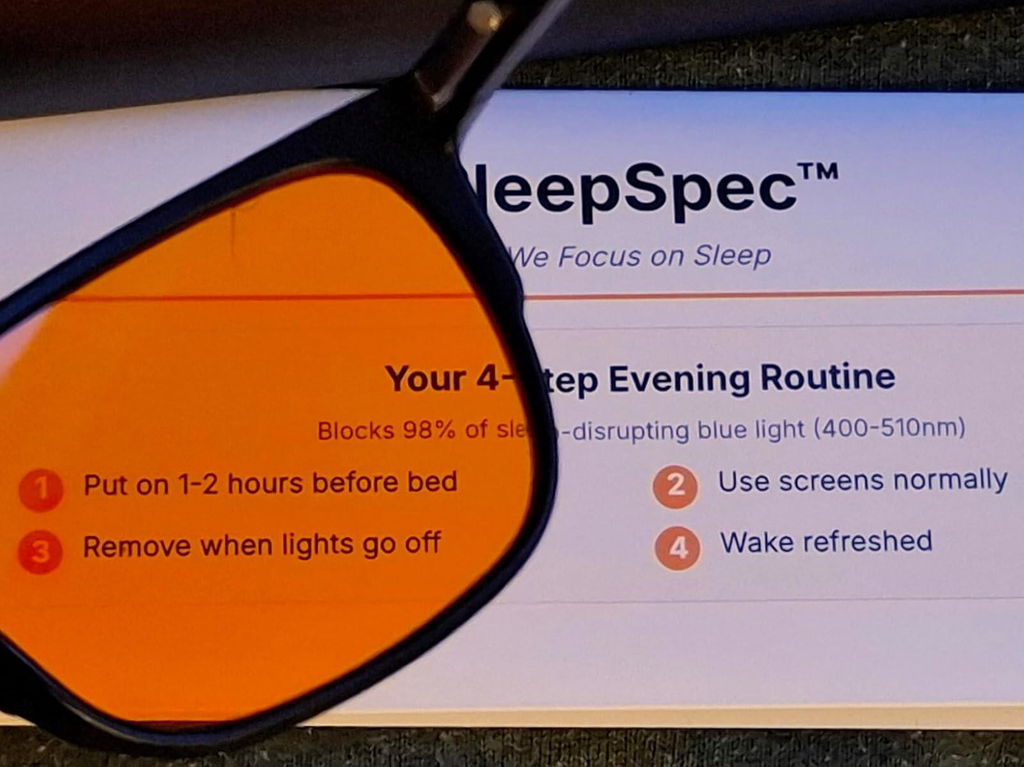
The view becomes distinctly amber. That colour shift is intentional, while screens, text and entertainment remain usable.
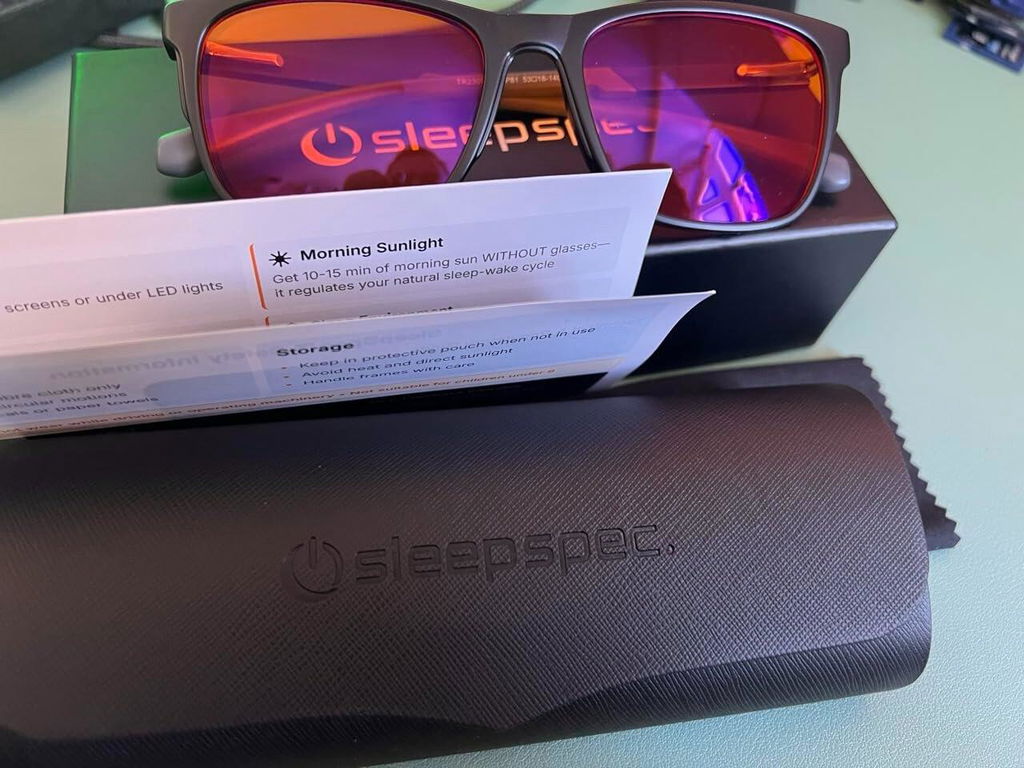
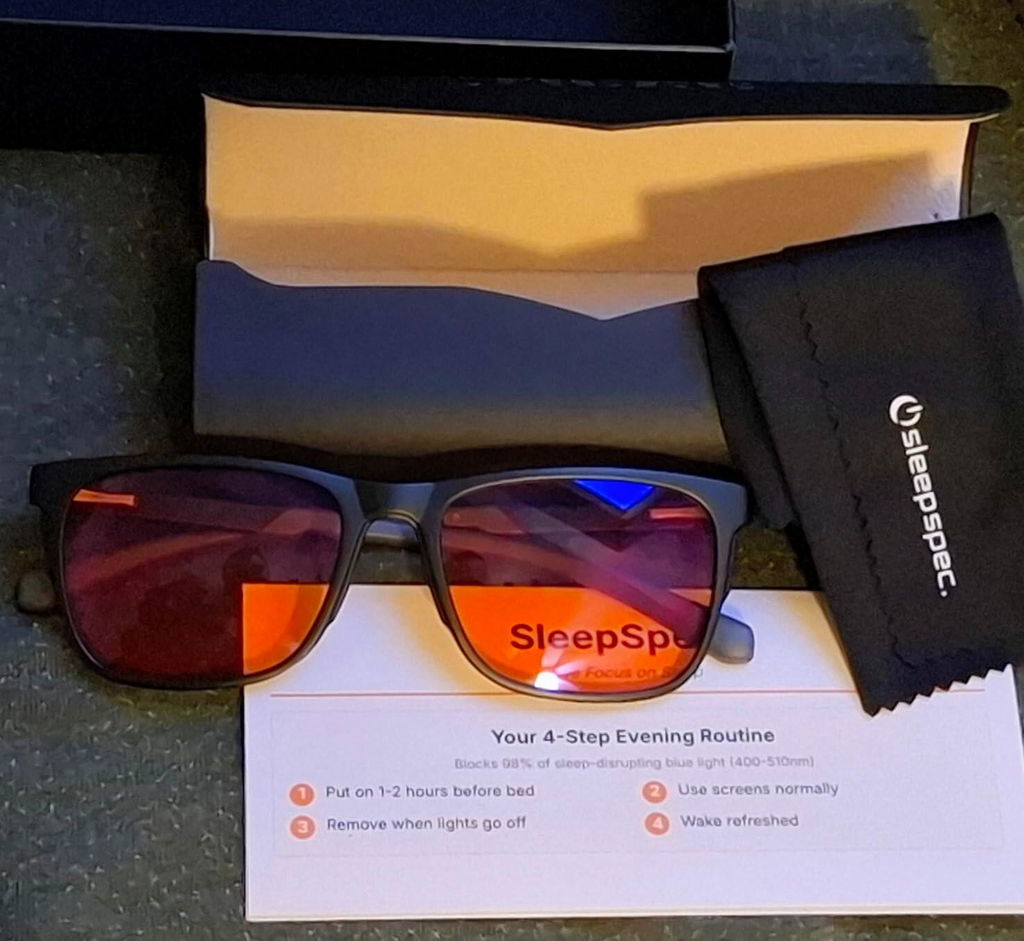
Your SleepSpec glasses arrive with a presentation box, hard case, microfibre cloth and quick-start instructions.
The frame usually fits over prescription glasses, though fit depends on the shape and size of your frames. It is not a dedicated fit-over model. Clean the lenses with the supplied microfibre cloth, or mild soap and lukewarm water.
SleepSpec includes a one-year warranty against manufacturing defects. Accidental damage and normal wear are not covered.
Keep the screens.
Lose the light
that keeps you awake.
The usual advice is no screens before bed. SleepSpec blocks 98% of the blue-green light your brain reads as daytime, so you can wind down without giving them up.
Designed around sleep researchBuilt on sleep science
One payment · about 8p a night over a year
 Phone, laptop and TV98% blocked, 400–520 nm
 Screens stay readableDeep amber, not clear
 Ultralight 23 g frameBuilt-in nose pads, spring hinges
 1–2 hours before bedOff at lights-out
Couldn't load pickup availability
+29min
of measured sleep for people who struggled to sleep, wearing amber lenses instead of clear
+58%
night-time melatonin, your sleep hormone, after two weeks of evening blue-blocking glasses
SleepSpec is built on these findings, but wasn't part of the studies themselves. See the research
Blue-rich evening light can suppress melatonin and push the body clock—and sleep—later. SleepSpec is designed for the final 1–2 hours before bed, filtering the blue-green range while you continue watching, reading, scrolling or working.
The view becomes distinctly amber. That colour shift is intentional, while screens, text and entertainment remain usable.
Your SleepSpec glasses arrive with a presentation box, hard case, microfibre cloth and quick-start instructions.
The frame usually fits over prescription glasses, though fit depends on the shape and size of your frames. It is not a dedicated fit-over model. Clean the lenses with the supplied microfibre cloth, or mild soap and lukewarm water.
SleepSpec includes a one-year warranty against manufacturing defects. Accidental damage and normal wear are not covered.


Lens specification
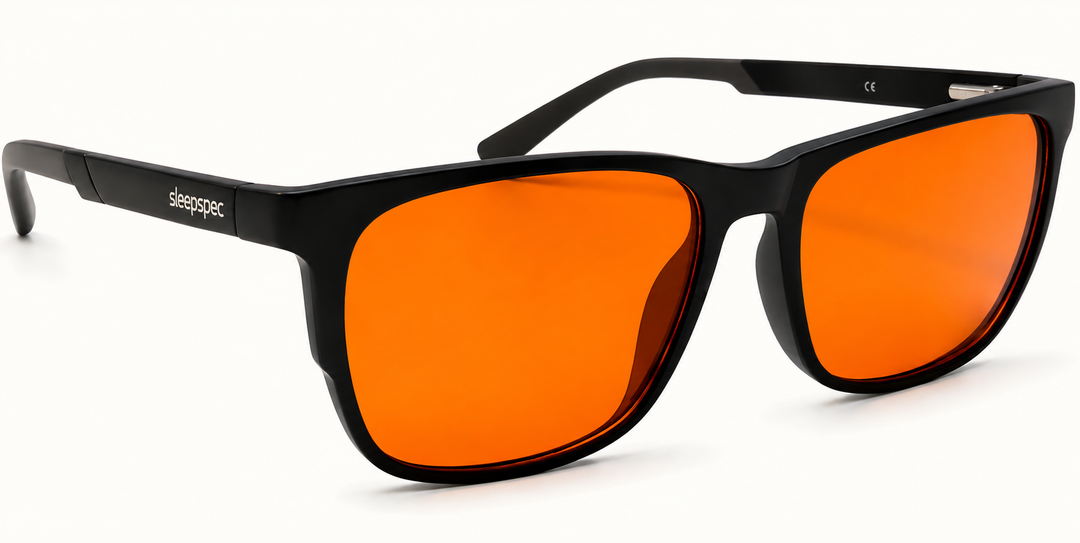
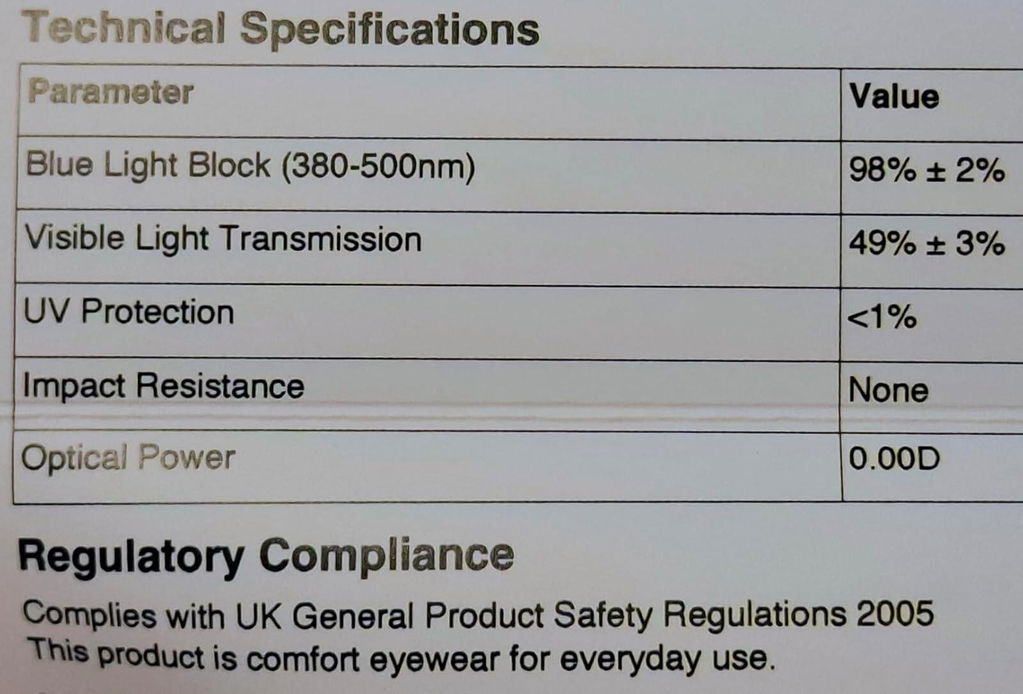
98% ± 2%blue-green light
Tells your body the sun has set
400–520 nmMelanopic Sensitivity Zone
The light your body clock reacts to most
53 × 41 mmwide-profile lens
Less stray light at the sides
Anti-reflectivecoating
Less glare from screens and lamps
23 gTR90 frame, spring-flex hinges
Light enough to forget they’re on
Low-pressurebuilt-in nose pads
Comfortable all evening

Drag to read the full curve
The payoff
The payoff of deeper rest shows up the next day. That’s why the hour before bed matters.
These are general benefits of better sleep, not guaranteed SleepSpec results. Individual results vary.
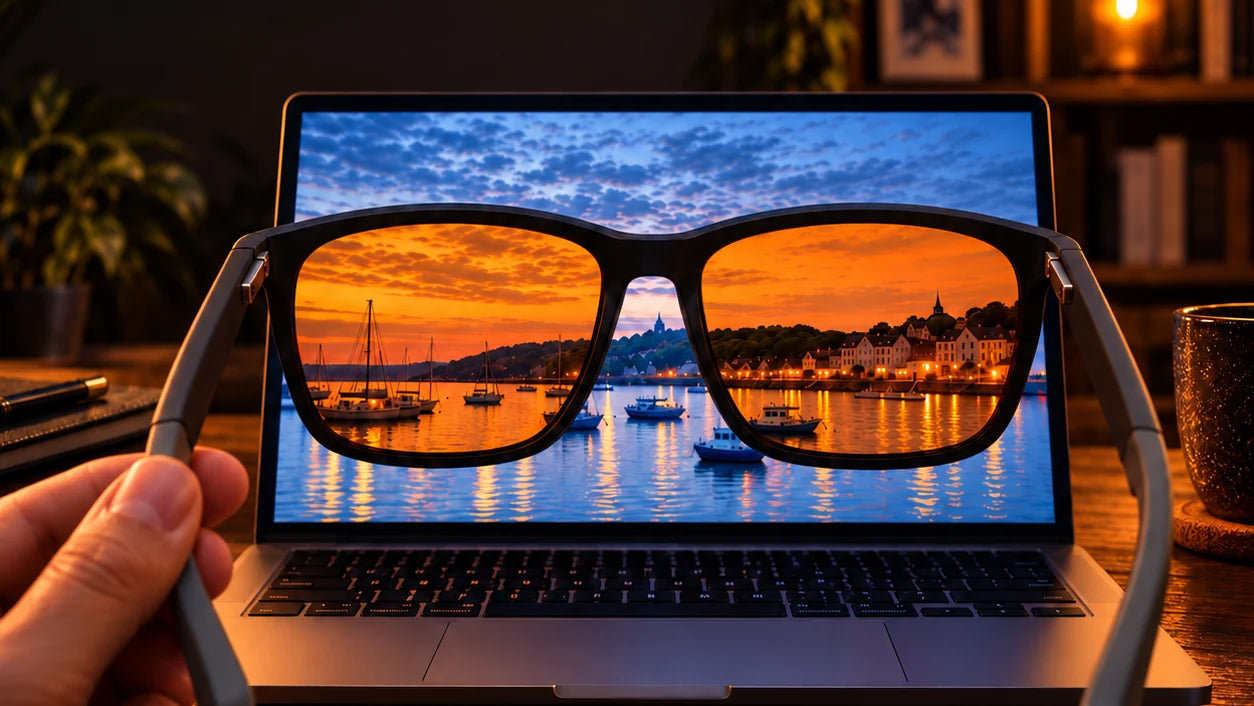
The view through the lens
Text stays readable and film stays watchable. What the lens changes is the colour of the light reaching your eyes, not the detail in front of you.
The warmth is the filtering. Removing the short-wavelength light that signals daylight to your body is what turns the view amber — strong colour and strong filtering are the same thing.
| Compared on | SleepSpec | Everyday blue‑light glasses |
|---|---|---|
| How much they filter | 98% of blue-green light, 400–520 nm | A fraction of blue light, on most pairs |
| When you wear them | 1–2 hours before bed | The working day |
| The lens |
SleepSpec Deep Amber lens screens and text stay usable |
Clear made for daytime screen comfort |
Comparing tinted glasses?
Whether they’re sold for gaming, migraines or sleep, ask what they block and across which range. We publish ours.
£29.99normally £34.99
That’s about 8p a night over a year. No refills, no subscription.
In the box Glasses, hard case, cleaning cloth, presentation box and instructions
Why SleepSpec works
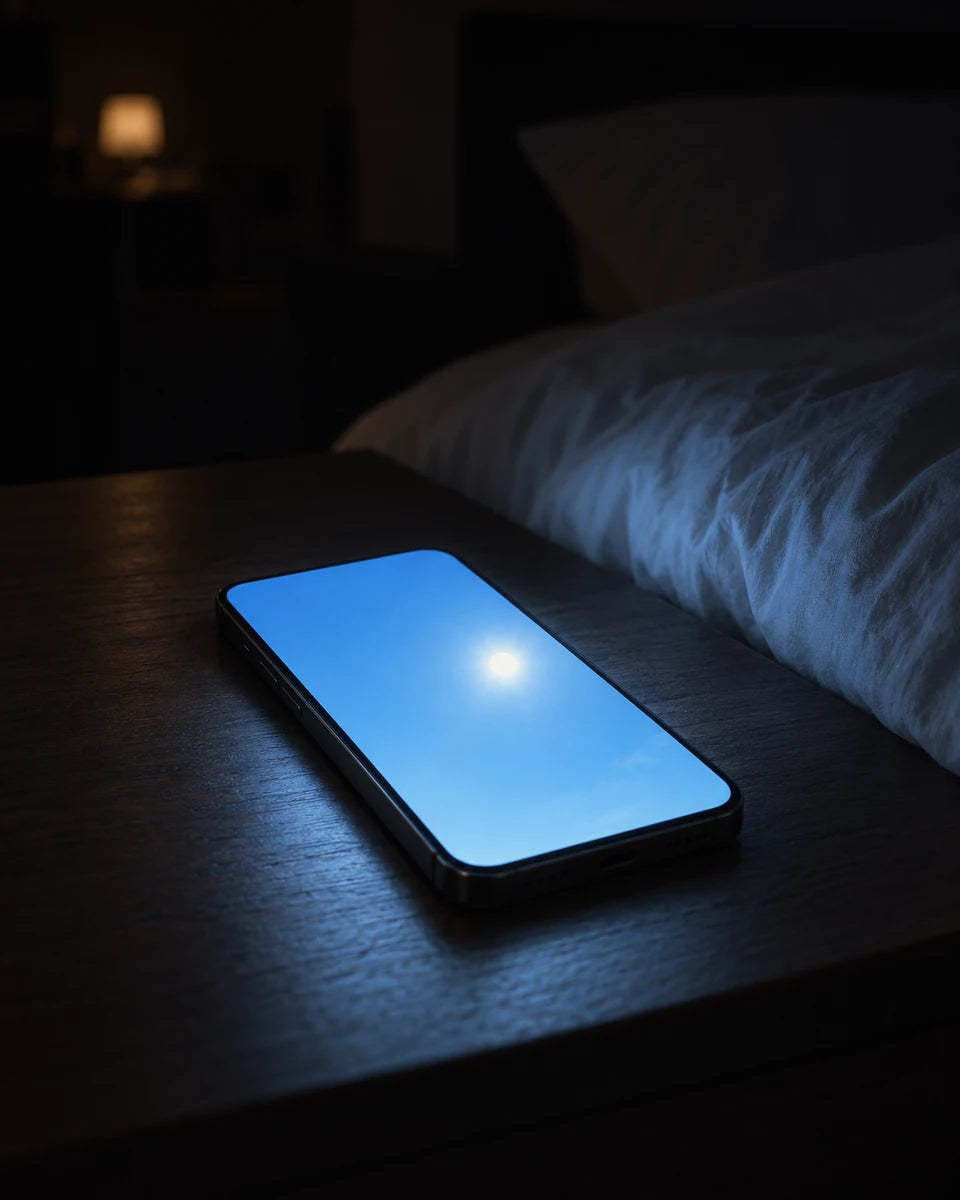
Without SleepSpec, step 01
It’s why the advice is “no screens before bed”. Bright, blue-rich light tells your body clock it’s still day.

Without SleepSpec, step 02
Evening screen light can hold back melatonin, your sleep hormone, and push your body clock later.
98% of blue-green light blocked 400–520 nm
With SleepSpec, step 03
No need to give up your screens. Your body clock still gets the sunset signal.
Free UK delivery, 2–3 days 30-day returns
+58%
Night-time melatonin
Melatonin is your sleep hormone. It rose after two weeks of wearing blue-blocking glasses each evening.
Ostrin et al., 2017 · University of Houston
+29min
Sleep, measured by wrist tracker
Amber lenses vs clear lenses, worn for 2 hours before bed by people with insomnia symptoms.
Shechter et al., 2018 · Journal of Psychiatric Research
The research informed the lens. The specification is ours. These studies tested amber and blue-blocking glasses, not SleepSpec. Individual results vary.
The case they come in is way better that any seeing eye glasses I have bought at 10x the price! A hard, hinged case with a magnetic lid that closes with a nice sound. It really is great value for money. Recommended.
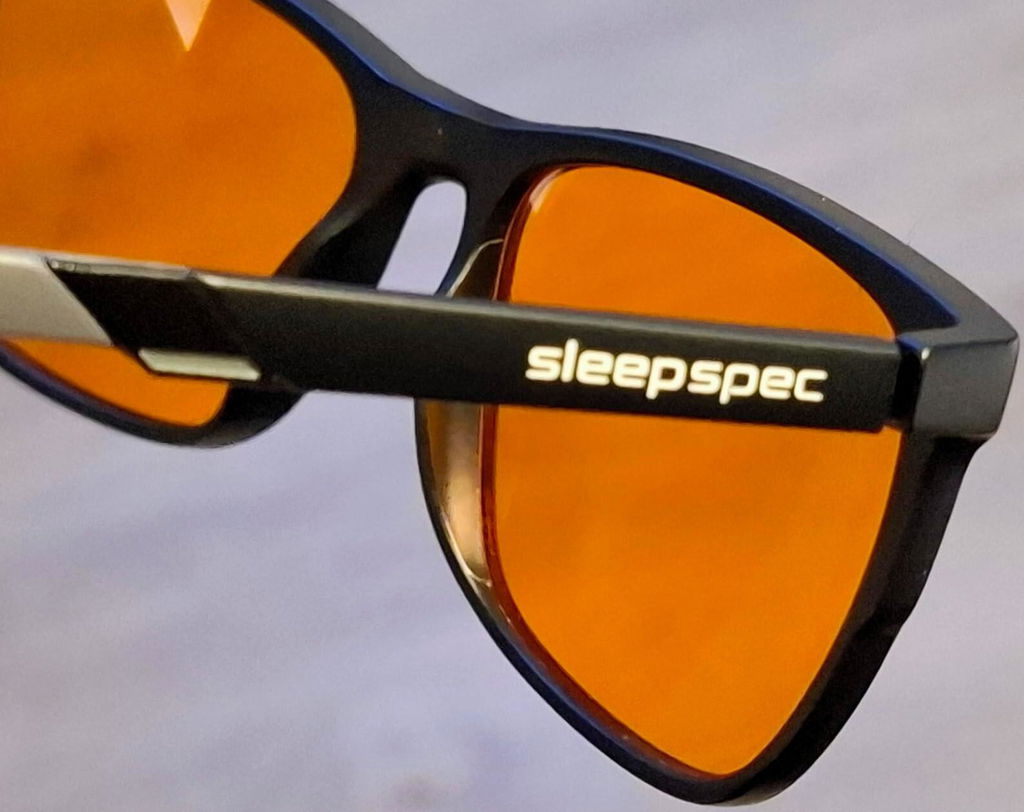
These seemed quite pricey when I ordered them, but what you get does seem good quality. The glasses themselves seem well made and have some nice detailing on them (see my photos). The whole lot arrives in quite a nice and sturdy gift box.
I read on my kindle in bed most nights and it used to take me ages to drop off after. With these on I can still see the screen fine, it just looks orange, and I drop off really quickly now. Comfortable and well made. Very pleased
Great glasses, sleeping better
They work, I'll give them that. But I feel bug eyed in them and my wife says I look like I'm doing an Ali G impression. Not a fashion statement. I only wear them in the house in the evening so it doesn't really matter, but don't expect to look good.
Got these for my teenage son who is on his xbox till late. They go on every night now and he says he gets sleepy earlier. Fantastic!
They genuinely made a difference to my sleep. They feel so lightweight you forget you're wearing them. The warm tint is quite strong which takes getting used to but honestly they do what they're supposed to.
The frame is light but feels solid. I can wear them for hours no problem.
The amber lenses calm your eyes down straight away. They're lightweight and comfortable. I noticed less eye fatigue during late night work. Packaging was really neat too. Recommended.
My teenage son stole these off me! He struggles to put down his tech at night. Christmas eve he followed the instructions exactly and actually fell asleep earlier than he thought he would. I had to wake him up Christmas morning. Now I need to get myself a pair.
Most blue light glasses are either too clear to do anything or so orange everything looks weird, but these are a nice middle ground. Since putting them on an hour or two before bed I've found it much easier to drift off.
By wearing these for a few hours before bedtime I have noticed my sleep quality has improved, both getting to sleep and number of hours. They come with a strong case, cleaning cloth and instructions. Definitely recommend.
I wear these for an hour before bed and my eyes feel a lot better for it. Comfortable to wear and does the job.
I've tried blue light glasses before, but nothing is a patch on these. They really are able to block those pesky blue/greens. They are well made, sturdy and most importantly comfortable to wear. On the pricier side, but you get what you pay for.
If you are having trouble with looking at screens for long periods then I would definitely recommend giving these a go. The build quality is nice, materials seem very good and I was not disappointed.
Worth a try. Have been wearing these for a couple of weeks. They are helping.
The glasses themselves are light weight and therefore are easy to wear. It takes some adjusting to watching TV through a sepia type tint but the effect does start to become normal.
The lenses are clear and comfortable enough to look through, with no magnification. Visually, they are not the most stylish, but the proportions suit my face and the finish is neat and tidy throughout. The edges are smooth, the seams are clean, and the colour matches the listing exactly.
The actual science is sound so I thought these might be worth a try. The hinges also seem nice and sturdy. The frames are lightweight and comfortable to wear. Be aware that the lenses are exactly as dark orange as they look. These are pretty damn orange! I could actually feel my eyes relaxing when I put them on.
Seems to work
Absolutely fantastic. Got these for my husband, he says they are the best blue light blocking glasses he's had so far. They cannot be used for driving, but they are great for basically everything else.
Whether it is a placebo or coincidence, I am falling asleep quicker. The lenses are more orange than expected, which looks odd, but it proves they are actually blocking the spectrum. Seems worth the money to me.
As someone who uses screens all day long and often struggles to drift off or to sleep soundly, I've often thought about trying Blue Light blocking glasses, so I thought I'd give these a go.
I chose these as I thought they looked a little less odd than alternatives I've seen, though the lenses are a little more orange in looks that I'd expected - not that I'm going to be wearing them out and about, but it's nice to have a pair that don't look weird!
The first two things I noticed, were how well presented and premium they felt thanks for the packaging and that they feel and look well made. They are incredibly light, which is great in terms of the comfort and "forgetting" that you are wearing them, though still manage to not feel flimsy or cheap.
These do significantly change the look/feel especially if in a light environment - you notice a big change taking them on and off - which I suppose goes to prove that they work, but can initially seem a little strange.
So far, I'm trying to use these when using the computer at night and when I know I'm going to be using my mobile plenty before bed and whether a placebo, coincidence, or proof they are working... I've noticed myself actually falling asleep fairly quickly - certainly quicker than before I started.
I'll keep using them for this as I understand the theory and hopefully extended use will just go to prove they are worth it.