
Evening screens
Blue light glasses for watching TV at night
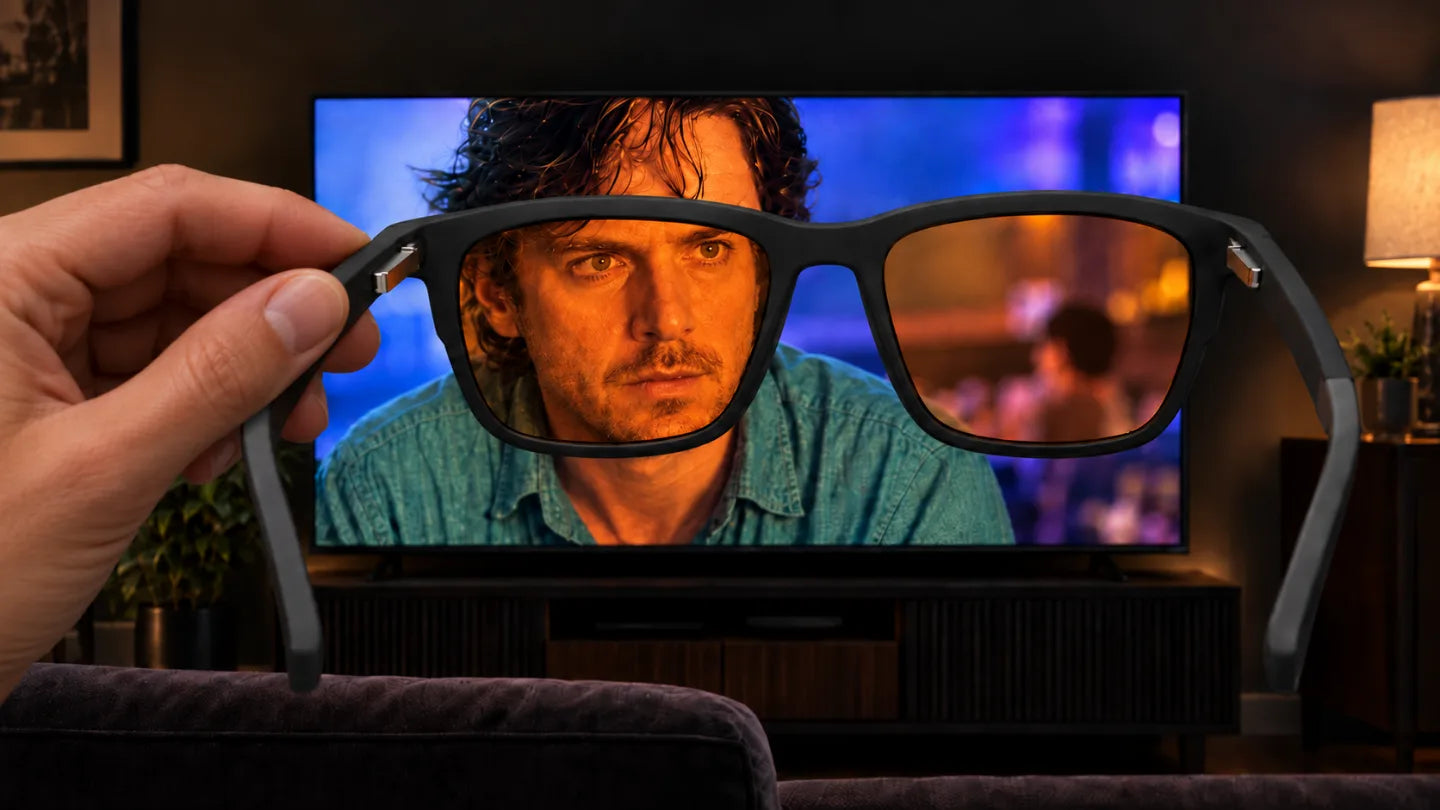
Yes, blue light glasses work for watching TV at night. For the 1–2 hours before bed, choose a deep-amber lens, not a clear one. It filters blue-green light from the television and from the lights in the room. The picture turns warm amber and colours look different, but you can still follow the picture and read the subtitles.
4.7 from 23 reviews Free UK delivery30-day returns
Do blue light glasses work with a television?
Yes. The lens filters light before it reaches your eyes, so the kind of screen makes no difference: television, laptop, tablet or phone. SleepSpec’s deep-amber sleep glasses block 98% of blue-green light across 400–520 nm. They are non-prescription and cost £29.99 with free UK delivery.
What does TV look like through amber lenses?
The whole picture shifts towards sunset tones. Colours look different for as long as you wear the glasses, while the picture and subtitles stay usable. Your eyes adjust within a few minutes, much as they do with tinted sunglasses, and the view starts to feel normal. If the exact colour of a film matters to you, watch it earlier in the evening.
Can I wear them over my prescription glasses to watch TV?
Usually, yes. SleepSpec can be worn over prescription glasses, but it is not a dedicated fit-over model. It usually fits over prescription frames, although this depends on your frame’s shape and size and is not guaranteed. Check that both pairs sit securely and comfortably. SleepSpec does not offer prescription lenses.
Are clear blue light glasses enough for TV at night?
Clear blue-light glasses are made for daytime screen comfort. Most pairs filter only a fraction of blue light, which is why they look clear. For the hours before bed, look for an amber lens with a stated blocking percentage and wavelength range. See amber, red and clear lenses compared.
What about the lights in the room?
The glasses filter lamps and ceiling lights as well as the screen. It still helps to lower bright overhead lighting and choose warmer lamps when practical. A warm picture setting on the television can make the screen more comfortable, but it does not replace the measured filtration of the lens: see night mode vs blue light glasses.
When should I put them on?
1–2 hours before bed, which usually means for the last programme or two of the evening. Take them off at lights-out. Blue-rich evening light can suppress melatonin and push the body clock, and sleep, later. Better sleep is not guaranteed, and individual results vary. See glasses to wear before bed.

SleepSpec Sleep Glasses
Tell your body
the sun has set.
£29.99normally £34.99
- Blocks 98% of blue-green light across 400–520 nm
- 23 g frame with built-in nose pads and spring hinges
- Hard case, cleaning cloth and guide in the box
- Wear 1–2 hours before bed. No app, no charger.
Free UK delivery, 2–3 days · 30-day returns · One-year warranty