
Lens guide
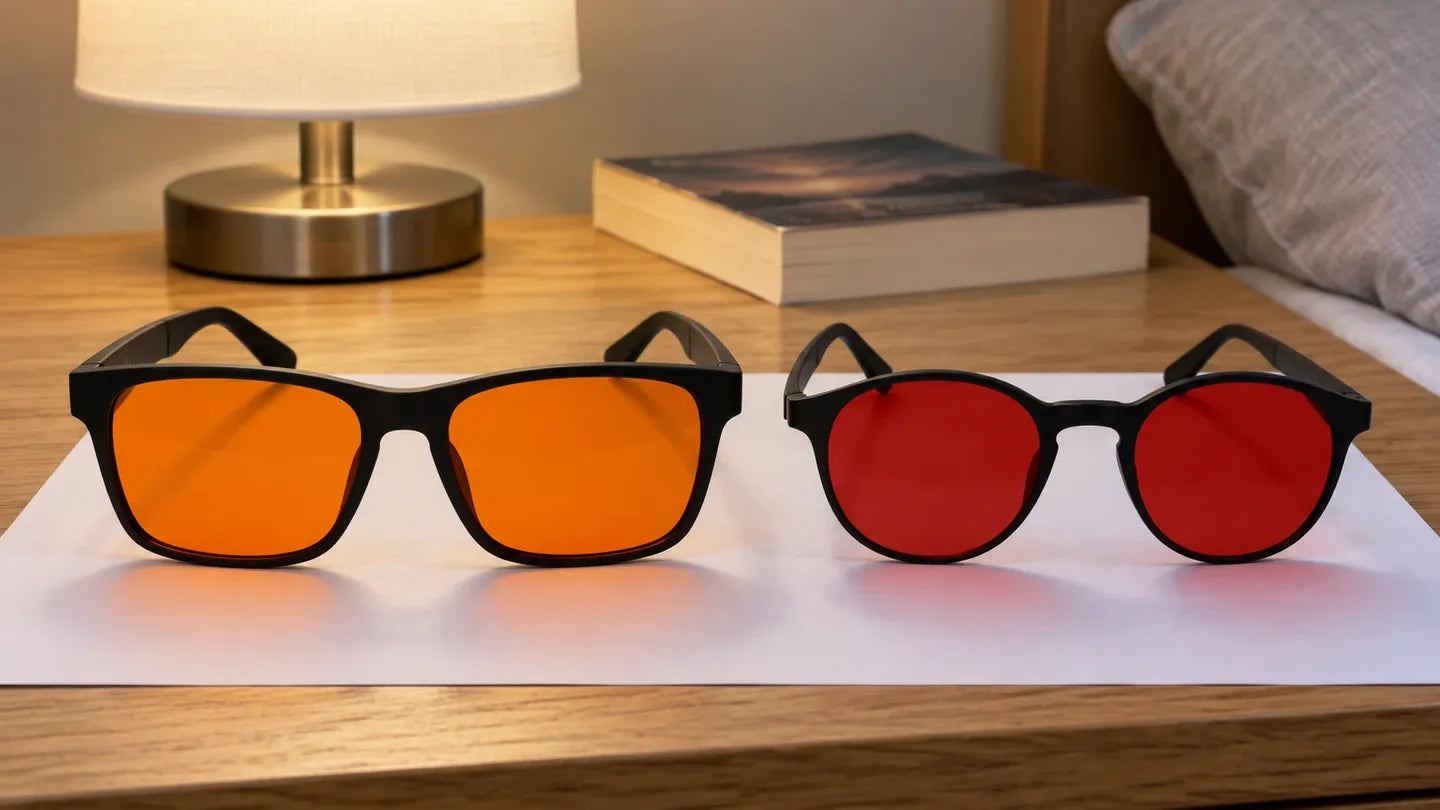
Red light glasses for sleep: red or amber?
Red light glasses for sleep have dark-red lenses that filter blue and green light before bed. They filter further into green than amber does, so colours change more. For the 1–2 hours before bed, deep amber is the practical choice for most people: SleepSpec blocks 98% of blue-green light across 400–520 nm, keeps screens and text usable, and costs £29.99 with free UK delivery.
4.7 from 25 reviews Free UK delivery30-day returns
What are red light glasses?
Glasses with dark-red lenses, worn in the evening to filter blue and green light from screens and room lighting. They are not red light therapy. Therapy devices give off red light; red-lens glasses only filter the light around you.
Red or deep amber, side by side
Figures vary between brands, so check each pair’s stated blocking percentage and wavelength range.
| Compared on | Dark red | Deep amber (SleepSpec) |
|---|---|---|
| What it filters | Blue and green light. BlockBlueLight’s red NightFall states 100% across 380–550 nm | 98% of blue-green light across 400–520 nm |
| How the view looks | Red; colours change more | Strongly amber; screens and text stay usable |
| Prescription lenses | Available on NightFall, from £134.95 | No |
| UK price | £74.95 for NightFall | £29.99 |
Do red lenses work better because they block more green?
They filter further into the green part of the spectrum, so they change colours more. Whether the extra filtering suits you depends on what you do in the evening. The body clock is especially sensitive to short-wavelength light around 480–490 nm, so whichever colour you pick, look for a blocking percentage across a range that covers that band. SleepSpec states both: 98% across 400–520 nm.
What does the evening look like through red lenses?
Red, and further from normal colour than amber. SleepSpec’s deep-amber lens preserves more natural colour than dark-red lenses. Amber is still a strong change, and colours look different. Your eyes adjust within a few minutes, much as they do with tinted sunglasses, and the view starts to feel normal.
Take tinted glasses off for anything that needs accurate colour, and never wear them while driving.
Should I choose red or amber?
- Choose deep amber if you want to keep watching, reading and scrolling for the 1–2 hours before bed with more natural colour.
- Choose dark red if you want the widest filtering and accept the colour change.
Which red light glasses can you buy in the UK?
Two of the five pairs on our list of the best sleep glasses in the UK filter blue and green light up to 550 nm, as red lenses do. By each brand’s own figures, checked on 27 October 2026:
- BlockBlueLight NightFall (red): 100% of blue and green light across 380–550 nm; £74.95.
- BON CHARGE Brooklyn: 100% of blue and green light across 400–550 nm; £99.95.
We have not lab-tested either lens. The list has delivery and returns for each, and BlockBlueLight vs BON CHARGE vs SleepSpec compares the two brands in more detail.
Is there research on amber lenses?
Yes. In a randomised crossover trial of 14 adults with insomnia symptoms, amber lenses were linked to approximately 29 minutes more actigraphy-estimated sleep and improved insomnia scores compared with clear lenses. The study did not test SleepSpec, and individual results vary. The research page lists the studies.

SleepSpec Sleep Glasses
Tell your body
the sun has set.
£29.99normally £34.99
- Blocks 98% of blue-green light across 400–520 nm
- 23 g frame with built-in nose pads and spring hinges
- Hard case, cleaning cloth and guide in the box
- Wear 1–2 hours before bed. No app, no charger.
Free UK delivery, 2–3 days · 30-day returns · One-year warranty